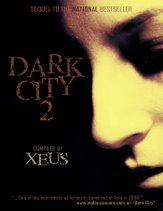
Tuesday, November 27, 2007

Interview with John Ling!

Here's a short interview with John Ling. I must say I loved 'Zero Sum', and I know Argus certainly did too.

1. Without giving anything away, how did you come up with (your story) for DC2?

I have always been eager to tackle a story in the first-person perspective. But for a long time, I just couldn't find a good enough reason to do it. Since the first-person narrator is unreliable and egocentric, it presents all kinds of difficulties.
DC2, however, gave me the opportunity to get past my reservations.
Instead of telling a tale that is realistic and objective, I decided to approach it from a different angle.

ZERO SUM is about a man so consumed by hate that he devotes himself to vengeance. His state of mind is in question. He is egocentric to the extreme. He is not a born killer, but he morphs into one. And the fact that the narrative is unreliable only adds to the flavour of the story; a mix of surreality and madness.

2. How long did it take you to write it?

It took me around two weeks of initial writing, followed by another week of rewriting under your guidance. I must admit, I'm pretty slow!

3. What made you want to become a writer? What have you written so far?

I have always been a reader from a young age. I was one of those youngsters who would rather hibernate indoors with a book than go outside to play football. So the desire to write came naturally. I dabbled with fairy tales in the Enid Blyton style.

Though, it wasn't until I was 18 or 19 that I began writing seriously.

I decided to try my hand at thrillers in the Robert Ludlum/Tom Clancy style, and had stories published in several American and British publications. In 2005, I gathered all my previously published material in one volume called FOURTEEN BULLETS, which was published by a small American press in Pennsylvania.

At the moment, I am currently working on my first novel.


4. Who are your favourite authors? What have you learnt from them?

My all-time favourite is Charles Dickens. His storytelling is so rich, so textured, you find yourself believing that his characters actually do have a life and a purpose outside of the story. Each character is, in fact, a universe in and onto himself.

Reading Dickens has encouraged me not to neglect supporting characters.

They can make or break a story.


5. What are your writing habits? Why do you write?

I tend to write in terms of 'scenes', not necessarily 'chapters'. Once a 'scene' is completed, I'm done for the day, and I will spend the remainder of my time polishing up what I have written. I don't usually find it productive to simply bang out thousands of words at one go, because two-thirds are likely to be eliminated anyway. Admittedly, I am fussy. I tend to under-write, rather than over-write. My reasoning is: it's better to leave readers wanting more, instead of wanting less.

Writing for me has always been less of a choice, and more of an compulsion.

Think of it this way. You are stuck at your writing corner for hours, days, weeks, trying to articulate your thoughts, while life passes you by. It's anti-social. It's unhealthy. Why on earth would you do such a thing?

Unless, of course, something compels you to do it.

Like a ferret darting and gnawing inside you, desperate to be let out.

Ultimately, I write because I am still struggling to make sense of certain traumas. Like Dickens, or Hemingway, or Tolkien, I find it easier to address them through fiction.


6. Do you have any advice to give to budding authors?

Here's a statistic: the average writer has to write half-a-million words before he gets his first novel published.

In other words, lots of trial and error.

So don't be disheartened if you don't feel like you are making any headway just yet. Writing, like most things in life, is less about talent, and more about craft. The more you write, the more you improve.

Keep pushing on, keep persevering, don't give up.

Friday, November 23, 2007

Sat at Litblogger's Club

Tan Twan Eng draws the crowd in! But seriously, everyone is so delighted we have our very own Malaysian Booker Prize long-listed nominee in our midst to give us tips! The area was packed to overflowing and everyone was pumped for lively discussion.


Things I have learned from Tan Twan Eng:

1. He corresponded only through email to lit agents with a cover letter and his first 3 chapters. Apparently, nobody snail mails anymore! He just went through a list of agents who are interested in representing the genre.

2. He took 1 year to write the book and 8 - 10 months to revise it. From 220,000 words, he cut it down to 160,000. He was also asked to shift certain sections around to make it more readable.

3. He set it in WW2 because it was a part of history most people around the world will identify with. When you write a book for the international market, he says, you've got to reach out to the largest section of readers possible. You can't do that if you write contemporary Malaysia. (This of course provoked a much heated debate from the audience, but IMHO, Tan has got something there.)

4. He didn't have a plan when he started out to write. He just knew vaguely a beginning and an end. The rest is added on as he wrote it.


The 2nd speaker, D. Devika Bai ('The Flight of Swans, Monsoon Books), also gave marvelous insights.

1. She did a lot of research because she set the novel in WW2 India, moving to Malaysia, then back to India.

2. She sent her manuscript direct to publishers, who were very kind to reply to her directly to tell her the good points and the 'buts'. A famous publisher actually told her she 'tells too much', not 'show'. For her 2nd book, she says she really made an effort to show, not tell.

3. She tried to get it published with Silverfish but at that time, Raman told her she started off the story in India, not Malaysia, and he'd rather she start it off in Malaysia to qualify it for Malaysiana.


After the sessions, it was get together time to network and catch up. Sharon Bakar actually told me something that really made my day; she told me how much she loved my previous DC1 story, 'Coup of the Century' because she absolutely did not see the ending coming, and that she thinks I write very good dialogue (?? I think my dialogue is one of my weak points in my writing and that's what's stopping me from writing screenplays!!). But thanks so much, Sharon, glad you liked the story.

And then she told me something else that was the icing on the cake - she says that Tan Twan Eng (who had already gone off for lunch) thinks I write really well and have an eye for storytelling - and I didn't know really whether to believe her or she was just pulling my leg! Of course, I will now have to confirm that with him. I didn't even know he bothered to pick up my book! I am so far removed from being a serious literary and historical writer as the moon is from poor demoted Pluto!

Thanks TTE (if that's true, of course!)


On to other things:

VERY IMPORTANT

Sharon Bakar invites Dark City 2 writers to go on her Readings. I would like to recommend Jennifer Wan, Bissme S, Chua Kok Yee and Ahmad Azrai to go because I think the experience is going to be good. However, if anyone else wishes to go, please email me and I will give your name to Sharon.

I was also talking to Sharon and others about the terms 'jumping the shark', 'misdirect' and 'doublespeak', which are all screenwriting terms and how to twist your plot, and I did promise Sharon I'd blog about it in a later post.

Review from a famous writer

I was very chuffed when Lydia phoned me when I was in Vietnam and said she read Dark City 2 till 3 am!

This is her review posted at her blog

"Two local books came into my possession recently. One is Dark City 2, the sequel to Xeus’s Dark City which had garnered much praise in the media last year. I have four contributor’s copies in my possession for my story, Hin’s Moment of Truth. This story was first written for my writing correspondence course several years back. The assignment was to write a short story with a surprise ending. The tutor thought it was a good effort but alas I couldn’t find a suitable publication for the story.

One day I was going through my bank of unpublished and unfinished stories in my computer when a thought struck me. Am I such a lousy story writer that I have difficulty find homes for my fiction? I pulled out Hin’s Moment of Truth and emailed it to Xeus. Hey, I like the story, she said but you need to expand it. I reworked the story according to her suggestions. And I must say she’s a very good conceptual editor.

I read Dark City 2 in three hours. Most of the stories are exciting and unpredictable in their own way but two of my favourites are Xeus’s Signature Spa and Chua Kok Yee’s The Penalty. It so happened that my 16 year-old like these two stories too. (Don’t you like mine? I asked. Yeah, but I’ve read your story before, so it didn’t count, she said.)

In the Signature Spa, the protagonist, Gaia got her just desserts while enjoying her ‘Heavenly Spa’ treatment. In The Penalty, we empathize with Ah Tiong who got into trouble with the loan sharks when he lost his football bets. The ending came as a surprise as I had expected another twisty scenario.

Tunku Halim’s Hawker Man is a pulsating read but the ending is rather macabre. Cain Rashchall’s Maid to Order is quite risque and may score with male readers."


Comments:

I liked Lydia's short story. It was very Malaysian and had a nice macabre ending to it. I believe we have a potential to make every one of our stories marketable. We just need an able beta to spot our mistakes and how we can flesh out the plot and characters more because we are so into our own story we can't spot anything ourselves. All of us are always learning and when we write more in that particular genre, we become better and better.

Thursday, November 22, 2007

Sun review Dark City 2

Bet you've never seen me update so much before, eh? I expected this review to appear at the end of the month actually. And I would have totally missed it if not for my colleague who asked me, "Wah, you got new book out already ah?"

Here is a review from yesterday's Sun newspaper:


Review by N. Shashi Kala

"In this sequel to the twisty, terror ride that was the original Dark City, 17 disturbing new tales of murder and debauchery, some of which strike quite close to home, are revealed.

From the claustrophobic tomb of Strong Chemistry, the perils of banking (All in a Day's Work), to the ultimate punishment for gamblers (The Penalty) and the calculated payback for murder (Zero Sum), 15 writers (including the Sun's very own Bissme S.) flex their creative storytelling abilities to tease and tantalise the reader.

My favourite story in the collection is Till Death (Lou Joon Yee), which is black humour at its best when a married couple's fantasy of killing one another takes an unusual twist. On another level, the story also shows the damage a poisonous atmosphere at home can wreak on its inhabitants.

A more lyrical piece is Like Lingering Leaves: My Mother (Gwen Fontenoy) which has a daughter returning after a six-month absence to find her mother and home gone back to nature.

Though mostly enjoyable, the overall quality of the stories is not as good as in the first book, which was a little more inventive in terms of plot and twists. With few exceptions, most of the stories in Dark City 2 follow a predictable pattern, and one or two even run out of steam before the end (Tunku Halim's Hawker Man, in particular, is a misfire.)

Still, Dark City 2 proves that there are good Malaysian short-story writers out there with an eye for detail and a love of the macabre."


My comments:
1. OK guys, a mostly positive review! Congrats to Lou Joon Yee for charming so many people with her lovely story. If you missed how she came to write it, please scroll down to 'Interview with Argus Lou'.

2. Bearing in mind I also included Gwen Fontenoy's poetic Like Lingering Leaves because it is a surrealistic fantasy and I wanted a bit of variety in the book.

3. And everyone, always remember a review is just one person's opinion. Goodness knows I've been the target of so many reviews, probably the most of any Malaysian writer, and I've learned to accept everything with grace, good or bad. It doesn't mean if one person doesn't like your story, everyone else won't either. (And vice versa).

4. Please hurl bouquets and brickbats at the Sun if you agree/disagree with the review (!)

5. Okay, we as short story writers need to be more inventive with our plotting and twists in general. I'm coming to that in a later post on Drama 101 - secrets I have learned about plotting twists (see first section below).

Tuesday, November 20, 2007

Drama 101: The Basics

I promised I would share whatever I learnt about writing through my new motto: “To learn is good, to share is better”. So this is the opening salvo.

Now I love prison stories. I wrote a prison escape short story (‘One if By Land’) for Dark City 1, and another ‘Get man out of imprisonment’ tale for Dark City 2 (‘Strong Chemistry’), all these before I ever saw Prison Break.

I can honestly say I’ve learnt more about storytelling from ‘deconstructing’ Prison Break Seasons 1 and 2 than any ‘How to write’ book. This is gleaned from listening to the screenwriters/producers’ DVD commentaries and what they post on the Internet. (Prison Break creators and screenwriters, about 6-7 of them, tend to be very generous with sharing). You see, I wanted to know what made the show so addictive to the extent I watched 44 episodes back to back in 1 week, neglecting to visit Lydia in Klang during my leave. (This has never happened to me before: addicted to a TV show, I mean, not visiting Lydia in Klang. Hmmm. Maybe I’ll take that back. I’ve never visited Lydia in Klang.)

So I made a lot of notes during the course of those 44 episodes which I’m going to post here.


Prison Break Season 1 (Golden Globe nominated for Best Drama and originally conceived as a mini-series called “Steven Spielberg presents Prison Break” before the great director bowed out to direct ‘War of the Worlds’) is the most classical textbook example of Drama 101 you’ll ever get. Drama 101 is deconstructed like this:

Act 1: Put man up tree

Act 2: Throw stones at him

Act 3: Get him safely down again


So let’s you say you write the premise:

“Man willfully commits a crime to he can go to prison to break out his brother, who is innocent but on Death Row, after exhausting all legal possibilities. To do this, he tattoos a map of the prison on the one thing he can bring with him inside – his body. He has 1 month to do this before his brother faces the electric chair.”


Okay, so you’ve put him up the “tree”, which is the prison. You’ve even given him a timeline: 1 month – to set the pace.

Now you go to Act 2: Throw stones at him.

Drama 101 thrives on Murphy’s Law: “If anything can go wrong, it will.” Stones, curveballs, arrows, hard pellets, even bombs must be thrown at the hero, who must never be allowed to rest. (The moment he rests is the end of your story.)

Now, even if you know very little about prisons (such as a thirty-something woman like myself), you can immediately jot down a few notes of what can happen to your hero.

  1. Things that can happen to your hero if he remains PASSIVE (which means if he’s static, and doesn’t choose to act at all):
- he can get beaten up, mutilated, discriminated against, tortured, raped by both inmates and guards etc

- he can be caught up in all events that can happen in a prison – riots, racial war, drug trafficking, black market profiteering etc


  1. But your hero isn’t passive (which means he’s not going to sit down and just let things happen to him), he has an overarching plan, which makes him ACTIVE. So now, you jot down all the things that can happen to dampen his escape plan, called OBSTACLES:

- If he maps out his escape route, have things go wrong to that route at every turn:


OBSTACLES:

MECHANICAL: unexpected physical barriers, such as a reinforced concrete duct, inability to get the tools/chemicals he needs to escape

LEGAL: forces can conspire to transfer him/his brother out, his brother’s execution date is speeded up, he gets a new cellmate who doesn’t sleep so he can’t dig his way out

PEOPLE: people don’t behave the way he wants them to, people he wants to manipulate can’t be manipulated, people find out about his escape plan, people double-cross him, he’s hampered by his own conscience, people he plans to use die unexpectedly

Then you go t o ACT 3: Get him safely down again, which will be explored in a later post.

Okay, now let’s take something as radically different from a male-orientated prison story as you can get: Chick Lit 101. The same rules apply:

Act 1: Get woman up tree – let’s say she desires a man/job she can’t hope to get at the outset of the story because she’s such a pathetic loser

Act 2: Throw stones at her – the obstacles are plentiful: man has beautiful current girlfriend, man has terrifying mother/sister, man won’t give her time of day because of her looks, her boss is a terrifying bitch who works her from 8 to midnight, she has a poisonous office co-worker who’s out to get her

Act 3: She solves all her problems, gets man/coveted job and all’s well that ends well.

It’s easy, isn’t it? Now we can take as many genres as we can get (horror, sci-fi, fantasy, crime) and apply these same rules and see what we can come with. We’ll already have an outline for an entire novel.

NEXT: BUT IN REAL LIFE, WE WRITERS HAVE DIFFICULTY THINKING OF OBSTACLES FOR OUR HERO TO SOLVE! AND WHAT’S WORSE, GETTING HIM SAFELY DOWN AGAIN!

Dark City 2 in Edge Financial Daily

Today, Dark City 2 is featured as the PICK OF THE DAY in Edge Financial Daily. The snippet says:

"Dark City 2 is the second installment of the national bestseller Dark City, which received critical acclaim from local and foreign media. The book features a collection of 17 diabolically entertaining tales by 15 authors from Malaysia, the UK and Switzerland. The book will leave you at the edge of your seat as every story has a twist. Writers include Xeus, Tunku Halim, Lydia Teh, Gwen Fontenoy, The Edge Financial Daily's copy editor Ahmad Azrai, Lou Joon Yee, the Sun's Bissme S., Cain Raschall and others. Available at bookstores nationwide. Priced at RM 27.90."

Wow! Hope we can live up to that blurb. For the record, the person who wrote that DID read the book.

Sunday, November 18, 2007

Interview with Argus Lou!

As promised, this will be the first of my blogs interviews with Dark City 2 authors. Argus Lou, who edited the first and second books grammatically, is on first. And she's already gotten her first complimentary review, courtesy of an SMS by a newspaper editor:

"Just read 'Till Death' and wanted to say how much I enjoyed it. Ally McBeal meets Norman Bates. A true black comedy on one level; an exploration of parental poisoning; a look at how murderous fantasies are translated into reality."

Congrats, Argus!

This is the interview.

1. Without giving anything away, how did you come up with (your story) for DC2?

I had already edited several DC2 stories, so I was wondering what sort of plot would fit the themes and style of the book. News reports tell us that a lot of murder cases are between husbands and wives -- hence, the title from the abbreviation of the nuptial phrase 'till death do us part'. So I began to think about how a spouse would consider killing the other half. And what would drive them to such thoughts. (Hands up, any wife or husband who has never even lightly entertained such a thought in moments of great exasperation!) But I didn't want it to be a straight murder story -- and wished to engage the reader in wondering what's really happening in the first few scenarios.

2. How long did it take you to write it?
Three to four hours. Then you made me do a few rewrites and add some details.

3. What made you want to become a writer? What have you written so far?
I'm driven by the connection between writer and reader -- as I'm a hungry reader myself. If I succeed in conveying a thought, an idea, a feeling or an atmosphere to a total stranger, then I feel elated and gratified. I've written part of a children's novel, with a few short stories in progress. For many years, I was a feature writer and copy editor for The Star newspaper in Malaysia, and edited CLEO magazine (Malaysian edition) for a couple of years in the mid-1990s. I've also written book reviews and film reviews.

4. Who are your favourite authors? What have you learnt from them?
From Chuck Palahniuk, I'm trying to learn an economy of words and crazy plotlines. From Alice Munro, I learn about observing relationships, especially between couples. From Paul Auster, I'm trying to learn how to create more complicated plots with layers of perception. I love Anthony Burgess, too -- he has such an easy prose style in 'The Malayan Trilogy'. And I was charmed by Tan Twan Eng's descriptive powers in 'Gift of Rain'.

From beautifully illustrated children's books, I attempt to keep my sense of wonderment and -- I hope! -- expand my imagination and creativity. Since I'm learning German, I've discovered some lovely children's books and wish to translate them into English (if no one has done it yet).

5. What are your writing habits? Why do you write?
Terrible! I wish I were more disciplined. Sometimes I wish the Internet would break down every few days so I'd have no choice but to set to work on my stories. I feel I have to read for 4 hours every one hour that I write. Wish I had a computer that were linked directly to my brain, so when I think up plotlines, characters and scenes, it can process them into words at once.

I wonder why I write, too... other than the reasons stated in response to question 3 above. Perhaps writing, in a way, would give evidence of my existence at the end of my life. And why that would be important, I've no idea. A sense of vanity perhaps?

6. Do you have any advice to give to budding authors?
I'm a beginning fiction writer myself, so I can't really say. I read your advice and that of other authors all the time. But I must say writing fiction requires one to live and observe life all at the same time -- strange feeling, that.

Saturday, November 17, 2007

Interview by Tunku Halim

The venerable Stephen King of Malaysia has just interviewed me for his blog, which promptly gave me a couple of ideas:

1. I shall interview as many DC2 contributors as possible and put it up on this blog (thanks, TH, for the idea and thanks for allowing me to do this after clearing with you, since it was your idea in the first place)

2. I enjoyed doing the interview about writing so much I think I shall post more about what I've learned about the writing process. Learning is good. Sharing is better!

BTW, Dark City 2 is already distributed in places like MPH MidValley (under Hot and New section as well as a prominent display in Malaysiana, I was told), Kinokuniya etc etc. See, I told you it would take a month!

Meanwhile, this is the interview

"Riding upon the blood soaked success of Dark City, Xeus, our Malaysian femme fatale, has just released Dark City 2 - a collection of ‘twisted’ stories, this time by guest authors including myself, Lydia Teh, John Ling, Bissme S, Jennifer Wan, Chua Kok Yee and a host of others.


I thought it’s an apt time for us to now delve into Xeus’s brain, to see how it ticks and what worms we might uncover!

Here’s the interview…

When did you first start writing short stories?

In 2005 actually, when I wrote Dark City. Previously, I had only written non-fiction articles for newspapers and magazines. I decided to try my hand at a new genre.

How long did it take you to write Dark City?

Surprisingly fast. 2 months for the first draft and 2 more months to rewrite it. I did 11 rewrites, each progressively faster than the previous one.

Is there any particular reason why you’ve chosen to write in this genre?

None other than the fact it’s quicker to finish a short story than a complete novel. I’m still in the second rewrite of a children’s book I completed and it has taken me a year and a half! Short stories are so rewarding in that you can finish each one and feel a profound sense of accomplishment.

Is it hard coming up with a twist for each story?

Not that difficult once I got the hang of it. I studied short stories extensively before I started out — the literary ones from Fitzgerald and Faulkner, the tongue-in-cheek ones from Roald Dahl and Jeffrey Archer. Then I would write a brief treatment for each idea, something that would go: “Girl works for a bar. TV is on. Newflash about a serial killer on the prowl. Girl walks home and is stalked by a serial rapist/killer. Write in POV of girl as a victim. REVEAL: Girl is actually the serial killer.”

I filed a lot of ‘treatments’ this way, and as I wrote, I kept getting more ideas for stories.

What advise have you for budding writers?

Read as much as you can. Learn from the writers you like. But there’s a difference between reading for pleasure and reading as a writer. When you read as a professional writer, you’re consciously looking out for plot points, twists, the way a certain sentence is phrased. For example, Jeffrey Deaver goes for the classic ‘misdirect’ in his short stories. However, Stephen King writes his short stories straight - there’s usually no twist in them. Jeffrey Archer condenses character backstory extremely well.

I would also advise a budding writer to watch as many movies and TV shows as possible, because they’re also all about storytelling. For sheer audacity of plotting, twists, classic ‘misdirect’ and cliffhanger writing, every writer must watch ‘Prison Break’. And more importantly, learn from it."

Friday, November 09, 2007

We're on for LitBlogger's Jan 26!

Guys!

Please check out Eric's blog:

There will be no Breakfast Club for LitBloggers in December 2007

COMING IN JANUARY 2008

The 11th MPH Breakfast Club for LitBloggers on Saturday, January 26, 2008, will be featuring the Malaysian Prince of Darkness, Tunku Halim, whose collection of ghostly tales, 44 Cemetery Road: The Best of Tunku Halim (MPH Publishing, May 2007), was published in May 2007. Touted as Malaysia’s very own Stephen King, Halim, who is equally adept at both fiction and nonfiction, has another collection of new and selected stories out, Gravedigger’s Kiss: More of Tunku Halim (MPH Publishing, October 2007).

Dark City (Midnight Press, 2006) author Xeus is back with Dark City 2 (Midnight Press, 2008), this time as the editor of a brand-new collection of more stories that exposes the murkiness that lurks beneath life’s apparent ordinariness. Of course, she has a story or two tucked into this collection as well. There are stories by Lydia Teh, Tunku Halim, John Ling, Bissme, Jennifer Wan, Chua Kok Yee and a host of others as well.

Eric Forbes will be introducing Tunku Halim and Xeus while Janet Tay will be moderating the session.


SOOOOOOO.... who would like to be in this panel? Everyone who has contributed a story to Dark City 2 is welcome. It will be an extremely fun meet with everybody there. Please respond if you can come.

Sunday, November 04, 2007

Meeting Dark City 2 writers

It was such a joy to go around meeting Dark City 2 contributors, many for the first time. I was going around delivering books and cash/cheques, and met everyone for the first time. Chua Kok Yee. Jennifer Wan and Bissme are such fun and talented people. I also learnt things about them I never knew. For example, who'd ever have thought Jennifer Wan actually worked in my very same building? Who'd ever though Chua Kok Yee is such a young, cool-looking guy in an absolutely cool industry? Who'd ever thought Bissme is tall, dark and handsome?

I also made a boo boo and described Chua Kok Yee as a MU fan because his character in the Penalty seemed to keep placing bets on MU. He went ballistic of course and declared he's NOT a MU fan but a LIVERPOOL one. (cringes, please don't kill me). :) Mea culpa. It's just I got so into his character I immediately assumed he would bet on MU.

Besides, we got our first unofficial review from Lydia Teh, who called me when I was overseas last week to tell me she stayed up till 3 am reading the book. Blog about it, Lydia, I naturally yell over the phone! But she called to say she loved Chua Kok Yee's story, The Penalty, and my story, Signature Spa.

I've been told the book is already available in MPH 1 Utama, which buys directly from the distributor. I guess the rest will slowly follow suit once the POs are raised and the books transferred to the warehouse.

As for publicity, I begged Star for some and Sun will put out a review. Haven't approached NST yet.

Friday, November 02, 2007

Turning book reviewer


I've added book reviews recently to my ever growing plethora of stuff I have to write but can't find the time and energy to do. Bmmmm. This is my first book review in years, appearing in The Star last week. Book is courtesy of Eric Forbes, who didn't want to read chick lit so he passed it to me:)

Don’t judge by its cover

A perennial chick lit reader is pleasantly surprised when she picks up what seems like her usual fare only to discover a novel that serves up something lost and unexpected.

THERE’S NO PLACE LIKE HERE

By Cecelia Ahern

Publisher: HarperCollins, 496 pages

(ISBN: 978-0007258871)

I MUST confess I didn’t much like Cecelia Ahern’s explosive debut novel, PS, I Love You. It was a case of faulty advertising. You see, the cover had me convinced it was light-hearted chick lit in the vein of Shopaholic-meets-writing pad-because-I-can’t-afford-a-computer, which is what I usually like.

But the novel’s “damsel in extreme distress” protagonist turned out to be weepy, self-indulgent and totally dependent on her late husband’s every whim. Chick lit protagonists are supposed to be confident, liberated and spunky! And so, with a sigh, I gave up reading Ahern.

When a friend handed me There’s No Place Like Here from Ireland’s most famous First Daughter, I cringed, of course, expecting to meet women who stare vacantly into space, waiting for Prince Charming to bail out their plumbing.

But Sandy Shortt, the 1.8m tall protagonist of Ahern’s newest story, (paperback released in June) is a refreshingly no-nonsense, occasionally wisecracking ex-cop who now runs a missing persons agency. (She’s Shortt but she’s tall, geddit?)

Because of her height, Sandy always felt ostracised as a child. In addition, she has a predilection for losing things. An odd sock here and there. A diary. A ratty teddy bear. Even her 10-year-old neighbour, Jenny-May Butler, who under angelic curls turns out to be the class bully.

There’s No Place Like Here plays on the theme that your missing things have to go someplace. Why do socks vanish in the washing machine? Why is it that when you’re sure you’ve put your car keys in your bag, you simply can’t find them? And why is it people sometimes go missing and never turn up even though there is no evidence of foul play?

Sandy is determined to find the answers. She has spent her entire childhood trying to find the answers, turning her parents’ house inside out each time she lost an item, to the extent they send her for psychological counselling at age 14 with dishy shrink Gregory.

Then one day, on the trail of a missing person, the adult Sandy finds herself wandering down an unknown path in a forest and goes missing herself.

This is when, instead of conforming to expectations set up by the chick lit cover, the book moves firmly into Mitch Albom-The-Five-People-You-Meet-in-Heaven territory. Which is not a bad thing.

In the forest, Sandy stumbles onto a group of people who have been missing since the days of the Beatles (they are now appropriately aged). And they lead her to a place called Here, one village among many, all made up of thousands of missing people from all over the world.

“Here” is a place where everything goes when it’s missing – old socks, airport luggage, cell phones, trays of doughnuts, loose change. In Here, Sandy finds almost every Irish missing person she has been looking for her entire life. Save the one she is currently looking for.

If you’re looking for romance in There’s No Place Like Here, be prepared to be disappointed. There’s very little of it. Any relationship is bittersweet, more in the vein of enduring-the-test-of-time than the loin-engaging, heart-pounding ones of traditional chick lit.

Sandy is a strange heroine with many layers. She’s selfish with her relationships and her family, and yet, she’s dedicated to helping the families of the missing people she has vowed to find. She hates children, and yet is devoted to finding them when they are gone. She’s guarded, occasionally rude, and suspicious of people who are trying to be kind.

With unexpected turns and revelations of the human condition every step of the way, I found myself mesmerised with the pseudo-fantastical There’s No Place like Here. Ahern has done her missing persons’ research well, blending wishful fantasy with cold-blooded reality in skilful, very readable prose.

If you want something unexpected, this will be your cup of tea. Just don’t be fooled by the cover design.

Thursday, October 25, 2007

Chapter from new non-fiction book

Meeting Lydia is always a breeze. She inspires me, simple as that. I was telling her all about my woes - got handbag snatched (RM 5000 gone altogether), bumped my car on a curb, my 2 maids did a Prison Break Indonesian style and ran away from my house, stealing 2 handphones, and she cheered me up completely.

And she's also a great font of information. Like she told me this was up in last Saturday's Star (as if I would notice, being out of town!)

This is actually an abbreviated chapter from my new book to be hopefully published by MPH next year. I'm going under the name Eudora Lynn for all newspaper, magazine articles and non-fic books under the same branding from now on. (Right Eric?)

http://thestar.com.my/lifestyle/story.asp?file=/2007/10/20/lifefocus/19112953&sec=lifefocus

Highway bullies

It doesn’t pay to be too aggressive on the highway if you are a woman.

I would like to tell you two true stories, which might make you rethink the way you drive.

You see, I am an “efficient” driver, in the sense that I don’t believe we should waste more time on the highway than necessary.

Perhaps I should add the word “safe” as well, which means I intend to get to my destination as quickly as possible without a) breaking any safety rules, b) leaving a litter of mangled cars in my wake, c) having the blood of stray cats smeared on my front bumper.

Woe betide road hogs in front of me, especially if they are from out of state. They’ll merit at least a toot from my very loud, very annoying car horn. But it appears some male egos simply cannot take a female driver hooting at them.

I was driving down the extreme right lane of the Federal Highway when someone from behind hooted. In my rear-view mirror, a white van was tail-gaiting me. Naturally, I did the only thing we “efficient, safe and occasionally dashing” (ESOD, for short) drivers do – I swerved to the middle lane to let him pass, because there is nothing we ESODs hate more than being labelled road hogs ourselves.

I had a good look at the driver as he passed me; he had a strange tattoo curling down his left arm. He glared at me. Uh–oh, I thought.

I kept course. There was a car in front of him (this is where it gets nasty), and he swerved onto the middle lane, narrowly missing my front bumper.

Naturally, I was indignant and hooted loudly, angrily. After that, it went deathly quiet, as though a chill had descended. (Well, as deathly quiet as 5pm on the Federal Highway can get.)

He slowed down, causing me to slow down as well. Strangely, I didn’t panic. The only word going in my mind, and it really wasn’t a word, was “Hmmmmm”.

After a bit of going slower than 50kph, he sped up. I let out a breath I didn’t know I was holding. I pressed on my accelerator as the road opened up in front of me. He was pulling away, and I wasn’t giving chase in any spirit of kiasu-ism, just easing my car into its natural 80kph speed.

My gas pedal went deeper as I stepped on it with my stilettos. My car’s engine whined and hummed. He was belting away fast, and I was closing in. And then suddenly, with a screech of burning rubber that must have smelt like a box of latex gloves which has just been microwaved, he dived to the right again.

Looming ahead of me was a large, slow-moving Pajero.

I slammed on my brakes with all the strength in my shoes. My brake pads squealed like a starlet who has just been publicly revealed to have silicone. My front bumper avoided hitting the Pajero, by just a nick.

Of course, this had been his intention all along.

Another hair-raising incident happened to a friend of mine driving from Kedah back to KL after a business meeting.

She had left Alor Star rather late, and it was already past midnight. The North-South highway was empty except for occasional cars and late buses.

My friend was maintaining course in her 4WD on the left lane, keeping well below the speed limit, when, suddenly, a car on the right swerved roughly into her path.

Now my friend is of a very patient disposition. She is not an ESOD. In fact, I would label her a CCANLTH (Cautious, Careful and Not Likely to Honk). But because this car threatened her very safety, she pressed very lightly on her horn to let him know she was there, so the sound that came out was “pin.”

The driver on her right was on his cellphone and probably hadn’t realised he had weaved onto her path.

When she pin-ned, he seemed shocked and immediately swerved to the right again, tires protesting like an anti-war demonstration.

My friend maintained her course and thought that would be the end of it. But it wasn’t.

The driver accelerated and nose-dived in front of her, and then slowed down to 30kph. Naturally, she had to follow suit. They maintained this charade for five minutes, and when she tried to overtake him on the right, he immediately blocked her off.

My friend looked frantically around. There were very few cars in sight. They continued on this crawl for 20 minutes. And then a lorry passed them on the right, horns blaring. Seizing this momentary distraction, my gutsy friend overtook the sedan on the emergency lane and settled once more into course.

Please, she prayed, let this be the end of it.

But again, it wasn’t to be.

The sedan driver, in full rage mode now, overtook her once again and tried to block her off. Pulse fluttering, she inched her car onto the right lane. He immediately followed, cutting her off. And then he did something amazing, even by Malaysian highway standards.

He screeched his car to a complete halt in the middle of the right lane.

Her heart going into standstill, my friend stopped her car. It was no use trying to overtake him anymore. It would only aggravate him further. This was a showdown. He was going to climb out and beat her up.

The two cars waited on the highway for what must have been only minutes, though it seemed a lifetime to my friend.

Where were the police? Surely someone must come to her aid? Would they find her dead body sprawled in a gutter the next day?

And then something clicked in her mind. Why did women always have to be victims?

Resolution settling, she revved the engine of her Mitsubishi Storm, put it into first gear, and floored the gas pedal. Fifteen feet, 10 feet – the sedan was still stationary, she winced and closed her eyes – and slam!

Her spine juddered.

When she opened her eyes again, the sedan’s boot had been compressed like an accordion. She reversed, set her gear into first again, and swerved onto the left lane.

Then she left, flying into the night without looking back, heart knocking at her chest wildly, and drove straight to the nearest police station in the next town.

Barging in breathlessly through the front door, she told two surprised policemen, “Help me! I drove here as fast as I could. Someone is trying to steal my car!”

For the next two days, she kept looking round her shoulder, waiting for her insurance agent to call to say someone has made a claim, but nothing happened.

I guess if you want to be an ESOD, you’ll have to look out for the AHs. And that is an abbreviation for a word that cannot be mentioned in polite society.

Thursday, October 18, 2007

Received my copies of Dark City 2

Hi everyone, I got my copies of Dark City 2 today. For everyone who has contributed, please write to me so I can arrange when to pay you and give you your copies.

The book will be out in bookstores in 2 - 4 weeks (this is based on my experience).

I will be doing press and publicity for it in November, when the book is fully out in bookstores. Contributors, you may be called for interview and photographs :)

Sunday, September 23, 2007

Juggling

Now that my life has settled back to normal (well, kinda), I'm reviewing what I'm currently doing.

1. I have a hectic job that requires a lot of travel - Damn, I'd rather be writing, but it puts food on the table. I totally intend to collect as much money as possible so I can retire early and write full time.

2. I have finished my house renovation. It cost me RM 90,000! Totally had to break so many FDs to pay the contractor, who bte doesn't wear yellow boots like Phua Chu Kang but blue crocs. (The real stuff, not the pseudo ones you get from Tesco.)

3. I'm currently rewriting my children's book, Billy Lang, to make it as perfect as possible before submitting overseas. That's my labour of love so I'm checking every comma, dotting every 'i', you get the drift...

4. After a blue period that would have spiraled Picasso into depression's depths, I now have two intelligent maids! To understand how I suffered through the last moronic one who finally ran away, please read my 2008 yet untitled non-fiction book.

5. I'm currently writing a non-fiction book for MPH on Malaysian life, as I see it. I had lunch with Eric Forbes and Janet Tay today after the LitBloggers' Club and I apologized profusely to them for being so 'rojak' in my writing. "I must admit I really wrote very quickly," I said sheepishly, "and dashed it off to you guys without my customary rewriting and rewriting for at least 10 times."

"Oh no," Eric said kindly, "it's not too bad."

"You mean the grammar isn't bad, but the format is all rojak," I insisted. "I dashed half a chapter off to Star Weekender the other day. The editor, who has never complained about anything I wrote before, actually wrote back this time and asked me if I had a point to it. So the moral of the story is that you cannot squeeze a book chapter into a newspaper article, but you can certainly expand an article into a book chapter."

Janet mentioned she was amazed at how fast I could write. And here I was thinking I was a snail - because I could only write 1 chapter a week without running into writer's block. (I never have writer's block when it comes to writing fiction, only non-fiction.)

So - is one chapter a week for a non fiction book considered fast? Or is it really (as I suspect) the pace of an amoeba trying to get from Petaling Street to the Arctic?

Saturday, September 15, 2007

Update

I'm back....kinda!

So sorry for being away for the longest time. My house has been under construction for the past 4 months, my maid ran away and I've been awfully busy at work. Sorry for neglecting everyone and I will totally understand if you neglect me.

The editing of Dark City 2 is finally finished and I was at the publisher's to view the final draft today, down to the very last comma. So looks like it'll be out in the 2nd week of October.

See ya at the bookstores!

Saturday, May 26, 2007

Taking a break from blogging for a while

Hi guys, will be taking a breather for a while. Been too busy trying to self-edit Billy Lang, finish the final touches on Dark City 2 and at work, budget season is on (busiest time of the year). Also travelling to US next week for a bit.

Will be back when Dark City 2 is out.

See ya guys!

Monday, May 21, 2007

How do you feel about chick lit?


I've always liked chick lit (and am in the process of getting Eric to read it). I'm currently reading a book that would make the literari out there cringe with derision: "How to Kill Your Husband" by Kathy Lette. It's a laugh a minute, social commentary, chick romp all rolled into one.

But you see, that's how I feel about chick lit. It has a lot to say about our society of women today and how we juggle work, boyfriends/husbands, friends, kids and everything else. Hey, Jane Austen wrote the chick lit of her time and the women there spent their days mooning over how to get husbands, just like we do today!

I particularly like the humorous prose of Marian Keyes, Sophie Kinsella (Shopaholic series) and Nisha Minhas. Read one of their books and study how they write humour. They have the ability to turn a very tragic situation (like Indian bride kidnapping) into something you can share and laugh about (but at the same time, commiserate with the heroine's situation).

So, 'fess up now. Do you read chick lit?

(BTW, MPH 1 Utama has a bookshelf dedicated to 'chic' lit, but I suppose chick lit is chic too.)

Saturday, May 12, 2007

Being Edited

I'm buoyed by Eric's recent posts about Editing and how editors feel about receiving a good and bad manuscript.

Let's come from another persective: The writer's. How do YOU feel about being edited?

For me, being edited is a humbling experience, whether it's done by a conceptual editor or a grammar editor.

1. We realise our grammar, hyphenation, punctuation etc is not that great after all. Most of us tend to dispense with hyphenation, punctuation etc, thinking it has nothing to do with writing and that it's an editor's job. But in countries like the UK, they can just throw the manuscript out if we don't think of all the niceties.

2. We realise that our plot, or certain aspects of the plot, or character, is not as exciting as we think it is. Or that it doesn't make sense.

3. We realise we put in more words that we intended.

Several fanous editor and writer friends were very kind to edit the first 3 chapters of Billy Lang for me so that the manuscript is as perfect as it can be before I send it off. And even though I've rewritten them many times, it still is a humbling experience to be edited, and I'm very grateful for all of them who are looking out for me. As we writers/editors should be doing for each other to make our manuscripts as perfect as possible before we send it out to the foreign lit agencies.

As for Dark City 2, some of you were asking me, fear not! It's definitely on its way (July). It needs to be edited thoroughly (in the same vein again) before publication, and when the grammar editor and I are not happy about something, we go back to the author. A local book deserves the same editing and vetting scrutiny as a foreign book and we will not compromise on quality.

So how do you feel when you get edited?

Friday, May 04, 2007

Finishing a book....then comes the rewrite

Lydia was niggling me: "New update, please!" Yes, mam!

The reason for lack of frequent new updates? Yes, I've just finished writing Billy Lang. How does one feel having finished writing a 500+ page full length children's novel? The moment I finished writing it, last Tuesday, I immediately dove into the rewrite.

Which comes to the question. How much should you rewrite? When is enough enough? Sidney Sheldon has been known to rewrite 11 times for each of his novels. (Then again, Sidney doesn't really 'write,' he dictates to his assistant and she reads it back to him, then he crosses out what he doesn't want.) The rest of us struggling artistes have no assistant and therefore have to rewrite it all by ourselves.

I find rewriting a lot easier than doing the first draft. Most of the ideas are already there. Rewriting is actually for improved sentence construction, cutting out unnecessary sentences, words and passages that have nothing to do with the story, checking consistency of plot and characters and adding in foreshadowing to enrich the plot.

Ever read a book or watched a movie where a seemingly insignificant sequence is thrown in at the beginning, which comes into importance only later in the plot? Well, a lot of that comes in the rewrite.

Are you the type who shoots off his/her first draft and saves all corrections for the rewrite, or one who meticulously checks and crosschecks every page along the way, making sure it's perfect before you proceed? (Beware, the latter has been known never to finish writing whole books!)

Saturday, April 28, 2007

Malaysia's fave fic titles and Tunku Halim interview


So it's out, Malaysia's favourite fiction titles. I must say I didn't have time for vote in this poll. But the top 10 favourite fiction books in Malaysia are:

1. The Lord of the Rings by J.R.R. Tolkien (holds a proud place in my collection)
2. The Harry Potter series by J.K. Rowling (read them all and loved 1,2,3,4 and 6.)
3. To Kill a Mockingbird by Harper Lee (must get this one...I know, I know, I'm very low lit)
4. Pride and Prejudice by Jane Austen (read this in Form 3 and didn't like it at that time. But love Colin Firth as Mr Darcy)
5. The Da Vinci Code by Dan Brown (read this twice!)
6. The Chronicles of Narnia by C.S. Lewis (read Lion, Witch and Wardrobe and thought it too simplistic. But then, read it as an adult)
7. Anne of Green Gables by L.M. Montgomery (loved the mini series!)
8. Jane Eyre by Charlotte Bronte (read it in Form 2 and didn't like it much)
9. Little Women by Louisa May Alcott (read it in Form 2 and liked Beth the best)
10. The Catcher in the Rye – J.D. Salinger (must get this)

I was particularly stoked when I read this sentence in today's Star in the same article:

"There are no books by Asian writers in the top 10, but American-Chinese Amy Tan’s The Joy Luck Club and Arundhati Roy’s The God of Small Things are in the top 20. Other Asian authors whose work was listed include Chinese author Su Tong (author of Raise the Red Lantern), Indian writer Vikram Seth, Indonesian Pramoedya Ananta Toer Azizi and V.S. Naipaul. Azizi Haji Abdullah, Shaari Isa and Xeus are the only Malaysian authors whose books made it onto some lists."

I made it to some lists! This makes all that writing worthwhile after all!!!

In the same Starmag section, there's an interview with Malaysia's very own Stephen King, Tunku Halim, and he mentioned:

Malaysian books recently enjoyed: “Lydia Teh’s Honk! If you’re a Malaysian, Xeus’s Dark City, Adibah Amin’s This End of the Rainbow and the Silverfish series (that features local writers).”

Thanks, TH! I'm glad you enjoyed our books!